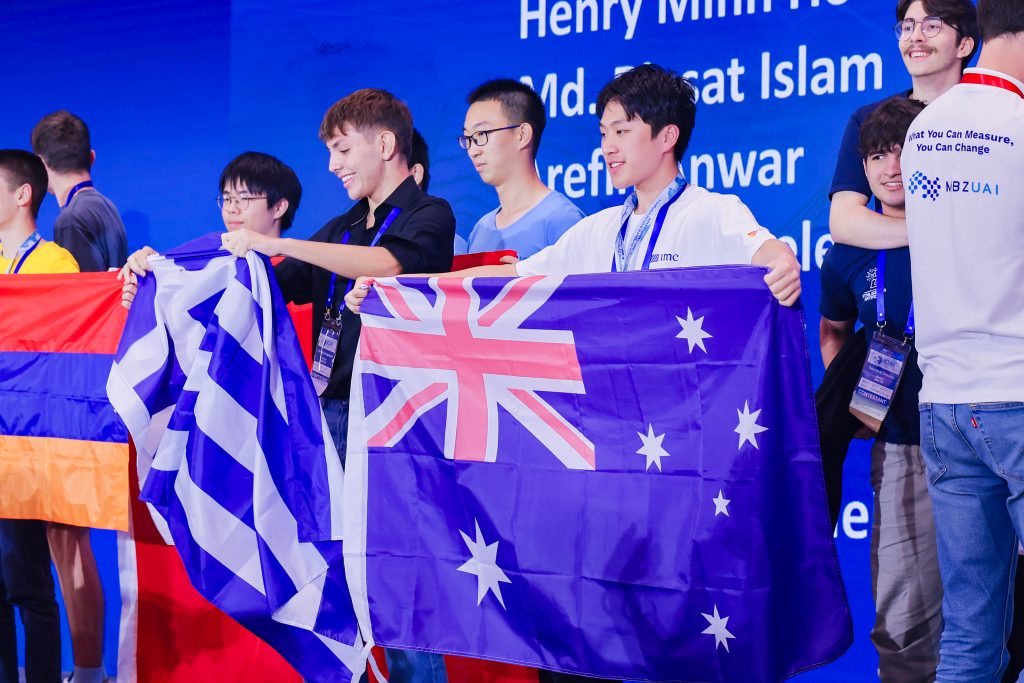
Australia IOAI 2024-2025: Joining the Global AI Education Elite 16.
Competition Overview and Professional Organization
IOAI’s second edition attracted 61 countries, 77 teams, and 300 competitors. The 2025 competition was held at Beijing National Day School (BNDS), one of Beijing’s most prestigious high schools, which provided world-class organizational support with its innovative educational philosophy. The competition employed cutting-edge AI competition systems with comprehensive post-competition review processes. The organizing committee’s high-quality AI summit sessions covered frontier technologies, educational innovation, and industry applications, providing participants with learning opportunities far beyond the competition itself.
Executive Summary
The International Olympiad in AI (IOAI) represents one of the pinnacle global youth AI competitions, attracting 61 nations across two editions. The competition comprises two core components: Theory Round testing AI theoretical foundations including machine learning, deep learning, natural language processing, and computer vision; and Practice Round emphasizing cross-disciplinary AI applications – AI+Art fusion in 2024 and AI+Robotics/Embodied Intelligence in 2025.
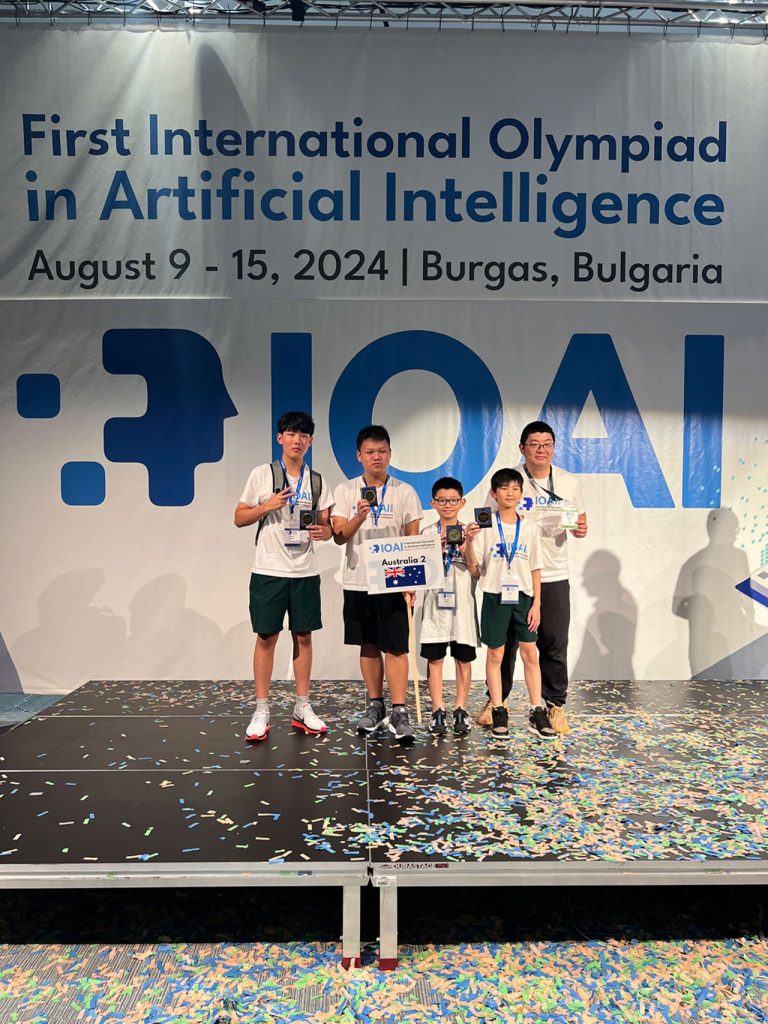
As of 2025, only 16 countries (26%) have achieved medals in both components. Australia’s national team secured a Practice Round Gold Medal in their 2024 debut, followed by a Theory Round Bronze Medal in 2025, successfully joining the global dual-award elite.
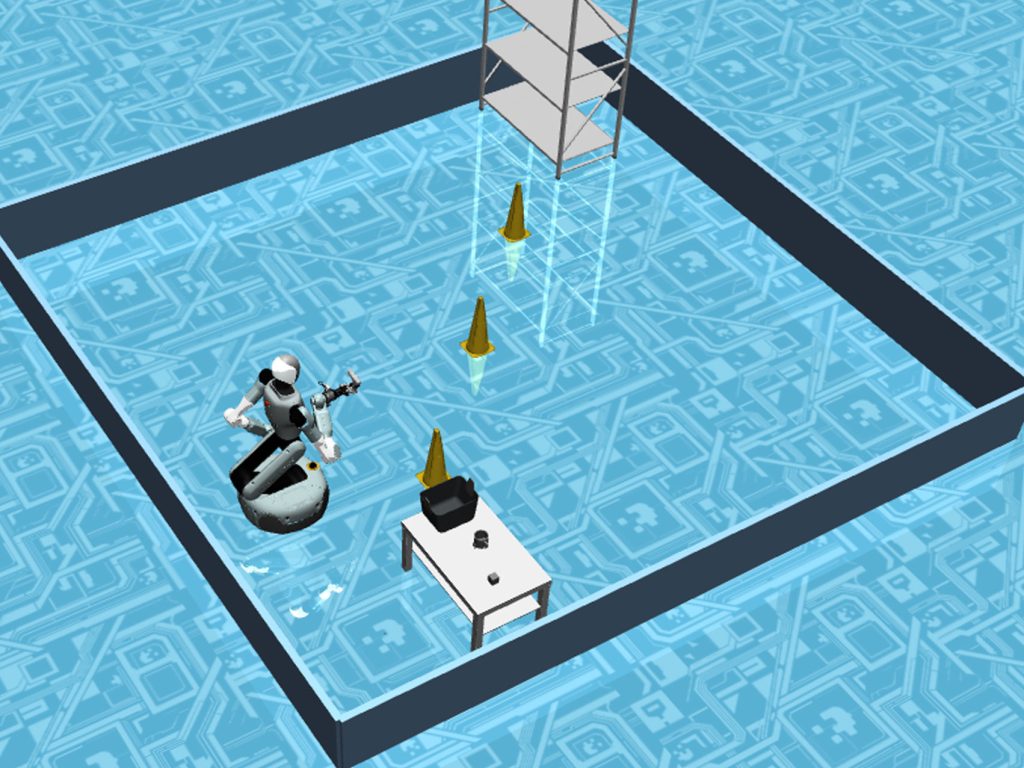
Australia team’s pre-match predictive scenario modeling
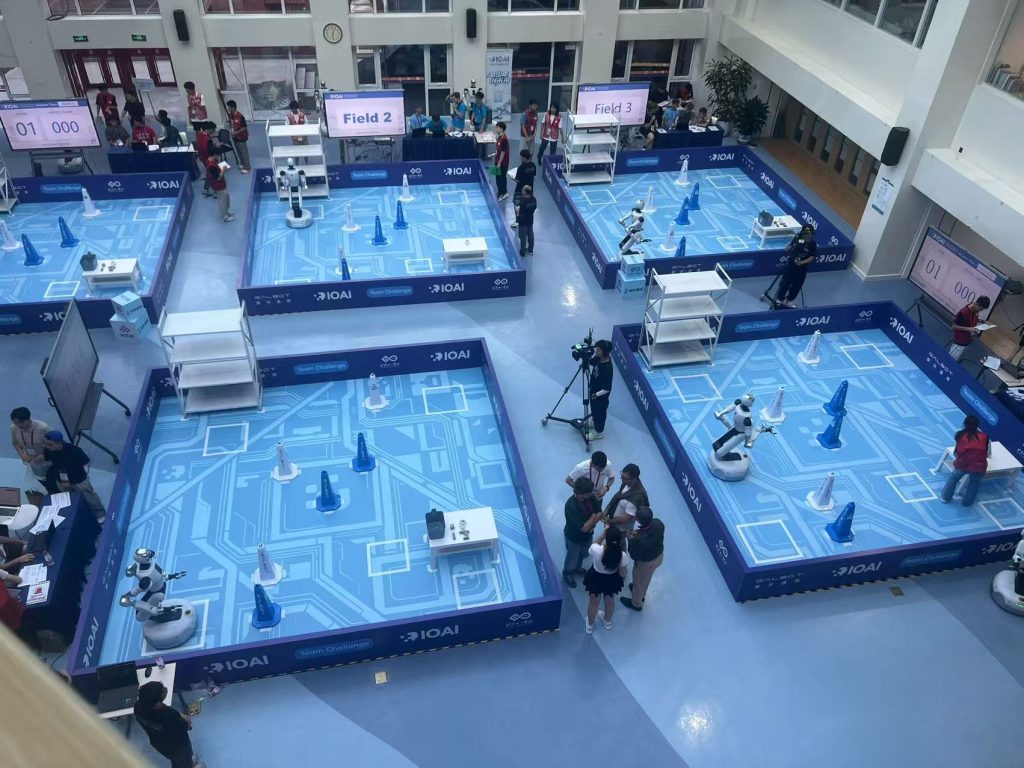
IOAI actual competition scenario
Notably, in the Team Competition, Australian competitors reached 130 points in just 2.5 hours (out of 140 maximum, 5-hour limit), demonstrating exceptional strength in practical applications.
Performance Analysis: Practical Strengths and Theoretical Breakthrough
Team Competition: Demonstrating Exceptional Practical Capabilities
In Team Competition Round 1, Australian competitors reached 130 points in just 2.5 hours (out of 140 maximum, 5-hour limit), displaying remarkable efficiency. This score would have secured top-10 advancement. Though a code modification in the final 2 minutes prevented ultimate qualification, this performance remains among the elite level among 300 global competitors, fully validating the training strategy’s effectiveness.
2025 Theory Round Bronze: Key Breakthrough
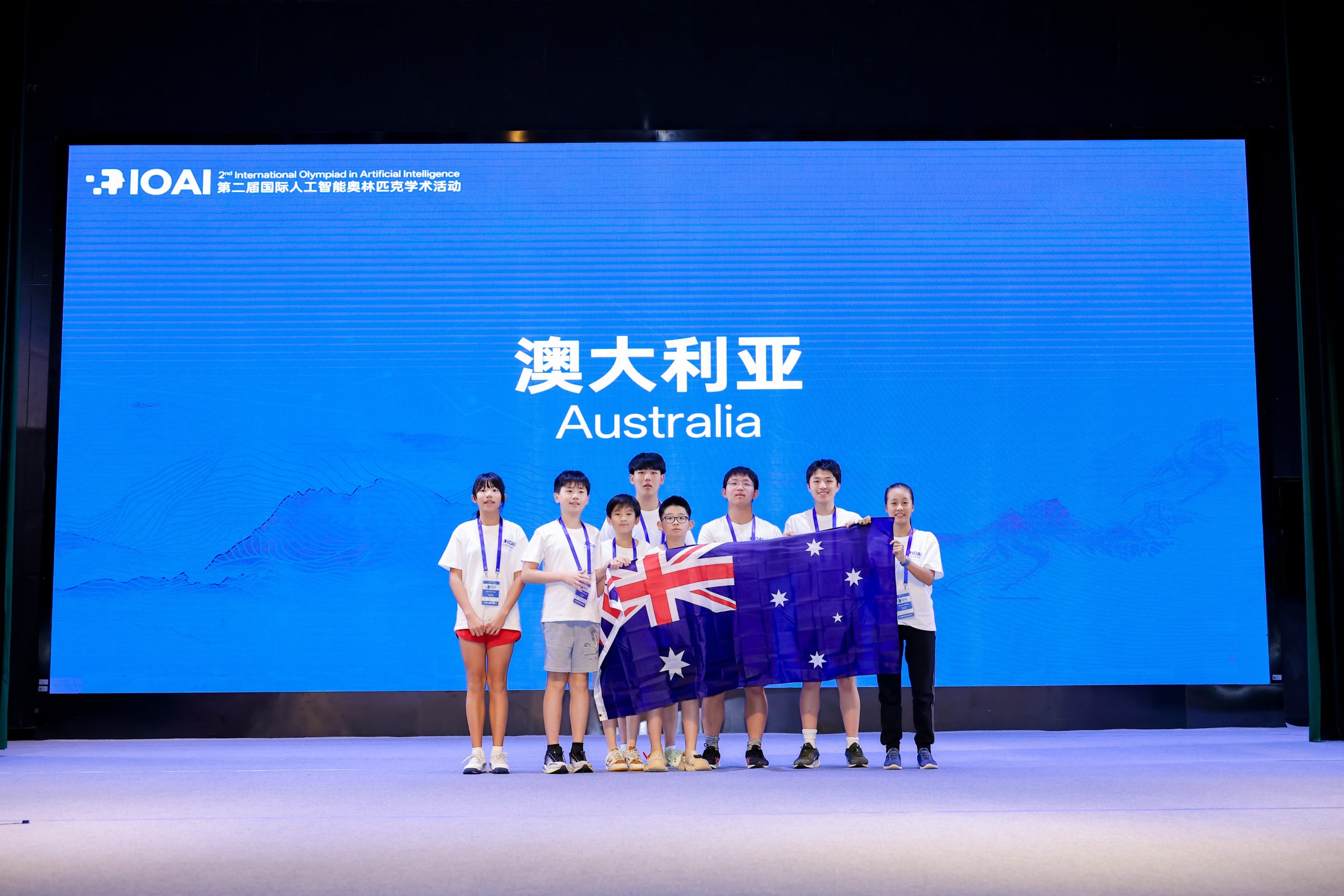
In the 2025 second edition, Australia’s team earned a Theory Round Bronze Medal, marking this participation’s greatest breakthrough. The Theory Round encompasses four core domains: machine learning, deep learning, natural language processing, and computer vision. This bronze medal signifies important progress in Australia’s AI theoretical foundation education.
Combined with the 2024 inaugural Practice Round Gold Medal (AI+Art fusion theme), Australia completed the transition from single-domain advantage to comprehensive development, becoming one of 16 nations globally with dual awards.
Forward-Looking Preparation and Hardware Support
Based on deep understanding of AI development trends, the Australian Committee predicted in March that the Practice Round would involve embodied intelligence. With IMC’s support, the technical team procured and deployed a complete hardware system in advance: NVIDIA Jetson Nano units (10+): for computer vision training and edge computing Intel RealSense depth cameras: enabling 3D perception and spatial understanding 6-axis programmable robotic arms (multiple units): practicing precise control and path planning Complete sensor suites: including LiDAR, IMU, etc. This forward-looking preparation directly contributed to the team competition’s outstanding performance, enabling the Australian team to complete in 2.5 hours what most teams required 4-5 hours to accomplish.
Australia’s Unique Selection and Development Model
Multi-Tiered Quality Assurance System. Australian IOAI established a rigorous quality assurance system: Selection criteria publicly transparent, published on official website IMC providing third-party comprehensive video documentation States independently organizing preliminaries, avoiding conflicts of interest Multiple judges participating in national team selection Committee leadership personally visited each state to conduct workshops, ensuring consistent training standards. Melbourne workshop’s success (producing the medal winner) demonstrates this hands-on approach’s value. Nationwide Selection Network. The Committee contacted over 150 academically distinguished high schools, conducting in-person workshops and selection exams in Sydney, Melbourne, Brisbane, and Adelaide. Online examinations ensured participation opportunities for students in Western Australia, Australian Capital Territory, Tasmania, and Northern Territory. Notably, the 2025 student who won Australia’s first medal came from Melbourne – while Victoria had no participation in 2024 due to time constraints, fully demonstrating the importance of expanded selection coverage.
From IOAI to Vivid Sydney: Continuation of International Cooperation
Bridge of Light Project: Innovative Transformation of Competition Outcomes
Most representative of IOAI’s continuing value is the “Bridge of Light” project submitted to Vivid Sydney 2026. Two Australian team members have invited overseas partners to jointly apply, planning to merge AI technology, artistic creation, sports data, and dream themes to create a cross-disciplinary interactive art installation.
The project’s technical framework includes:
Sports data collection and AI real-time processing
This project not only demonstrates technical innovation but more importantly establishes a replicable model for international youth cooperation.
Sustained Exchange with BNDS
Building on good relationships established during competition, the Australian Committee is exploring long-term mutual visit mechanisms with Beijing National Day School. This educational exchange will encompass student competition experience sharing, teacher training method exchanges, AI curriculum system comparative studies, and multiple other dimensions. This cooperation model can expand to exchanges with other countries’ top schools, forming an international AI education network with Australian participation.
Sustainable Development: Challenges and Solutions
Acknowledging Challenges, Formulating Countermeasures
While achieving significant accomplishments, we clearly recognize areas for improvement:
Theory Foundation Strengthening Plan
Challenge: Theory Round still has room for improvement
Solution: Introducing systematic 18-month theoretical learning pathway, balancing traditional AI foundations with cutting-edge technologies.
Systematic Risk Management
Challenge: Competition experience and psychological adjustment Solution: Establishing complete mock competition system and psychological counseling mechanisms
Talent Pipeline Development
Challenge: Maintaining competitive continuity Solution: Three-tier cultivation system (Foundation Level 10-12 years, Development Level 13-15 years, Elite Level 16-18 years)
Clear Development Goals. Consolidate global TOP 16 position. Balanced development of theory and practice. Expand selection base to all states nationwide.
Specific Implementation Plan
November 2025: Announce complete 2026 selection schedule
Preparation period: Extend from 4 months to 8 months
Training system: Systematic curriculum development Long-term Vision
We are building not momentary competition success but systematic advantages in Australian AI education. Through the IOAI platform, Australian youth are:
Establishing international perspectives and cooperation networks
Mastering cutting-edge AI technologies and applications
Developing innovative thinking and problem-solving capabilities
Becoming future AI industry leaders
Conclusion
Australian IOAI’s success represents collective effort. From the Committee’s professional organization to IMC’s generous support, to participation from 150 schools nationwide, this is truly a national effort. While Australian government departments have supported AMT (Australian Mathematics Trust) mathematics and programming competitions, AI as an emerging field has not yet received equivalent official support. IOAI’s success demonstrates the necessity of establishing similar support systems. As results become evident, we believe this model deserves recognition and support at higher levels, allowing more Australian youth to benefit from AI education opportunities. From IOAI venues to Vivid Sydney, from Melbourne to Beijing, this marks the beginning of Australia’s new generation connecting the world through technology and creativity.